
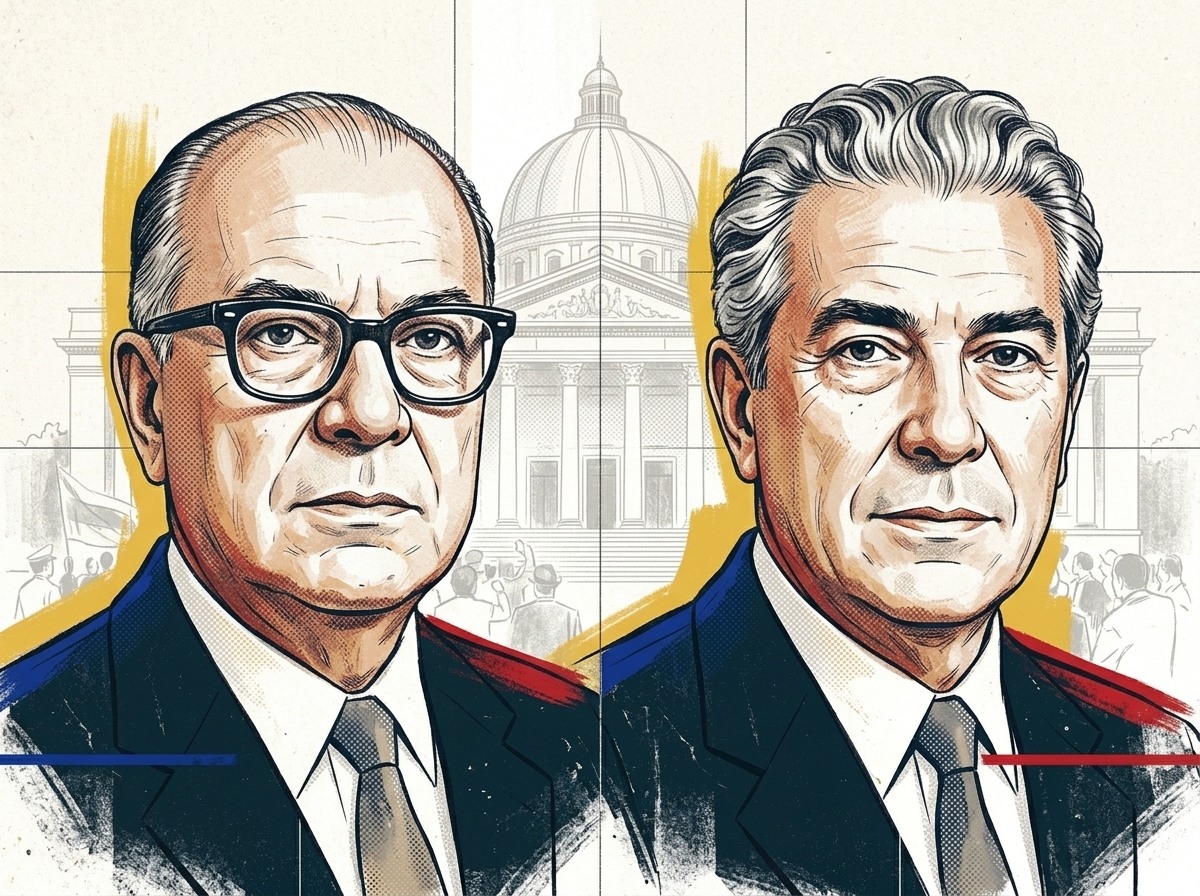
A pact to defend democracy
The Puntofijo Pact was signed on October 31, 1958 by representatives of Democratic Action (AD), COPEI and Democratic Republican Union (URD), after the fall of Marcos Pérez Jiménez. The agreement sought to defend the electoral process, form a government of national unity and sustain a shared minimum program. It was not a constitution or an alliance for a single party to rule forever.
Context matters. Venezuela came from dictatorships, coups and a partisan confrontation that had left deep wounds. The 1958 agreements attempted to prevent political competition from destroying the newly reestablished democracy. But the pact did not include all forces: the Communist Party of Venezuela was left out of the signature, despite its role in opposing the dictatorship. That exclusion must be acknowledged when telling the story; It must also be distinguished from the exaggerated claim that the pact abolished all political participation.
Institutional consolidation required more than the document. There were competitive elections, civilian governments, organized partisan forces, and peaceful transfers of power. In 1968, Rafael Caldera won the presidency for COPEI and AD handed over the government. The alternation between rivals with different programs was an important sign that competition could produce changes in government without a military coup.
Organizational strength and dominance
AD and COPEI built national organizations capable of linking communities, unions, associations, local leaders and voters with the State. This infrastructure helped democracy have social roots and not depend only on pacts between figures from Caracas. Parties formed cadres and offered avenues to participate in public life.
Over time, both became the main vehicles for accessing power. The presidential alternation between them reinforced stability, but also concentrated representation. The Empresas Polar Foundation summarizes that most of the political and bureaucratic personnel that governed Venezuela since 1959 came from those two parties. This centrality could make public decisions more coherent; It also increased the risk that the State would become confused with partisan networks.
The system had contradictions from early on. The original pact included URD, but the competition and coalitions changed over the years. Electoral stability did not mean that the entire society felt represented, nor that all policies were agreed upon in the same way. Studies of the party system describe how an initially plural scheme became concentrated in AD and COPEI and how that concentration became vulnerable when the organizations stopped adapting to social demands.
Oil income expanded expectations and dependencies
The growth in oil revenues gave governments exceptional scope to finance programs and investment. AD and COPEI governed within a State that could distribute resources without depending so much on taxes collected directly from citizens. That relationship had real benefits, but it made it easier for political competition to promise services, jobs and subsidies without explaining their costs or sustainability.
The oil state was not invented by a single party. The expansion of public companies, controls and development programs crossed governments and political currents. When prices fell, obligations and expectations remained. The economic crisis of the 1980s made more visible the distance between the promise of well-being and the ability to sustain it. Attributing all the problems to "the parties" is as imprecise as exonerating them because there were external factors.
Democracy also had to respond to a more urban, educated and diverse society. Parties that had previously organized participation could become rigid when candidates, positions and decisions were distributed within closed circles. Internal discipline and legislative negotiation helped govern; When they reduced competition and renewal, they fed the impression that the alternatives were decided before the citizen voted.
Wear was not a single cause
In the 1990s, economic deterioration, allegations of corruption, loss of trust, internal divisions and discontent with economic adjustments converged. The Caracazo of 1989 expressed massive protest and was followed by a violent state response. The 1992 coup attempts showed that military sectors could challenge the constitutional order, although they did not gain enough support to replace it. In 1993, Carlos Andrés Pérez was removed from the presidency after the Supreme Court admitted a pretrial of merit, and Congress appointed Ramón J. Velásquez to complete the term.
Rafael Caldera, former leader of COPEI, won the 1993 elections with Convergencia and the support of a broader coalition, not as a Copeyan candidate. That result showed that the electorate could look for alternatives outside the two dominant organizations. In 1998, Hugo Chávez won with 56.20% of the presidential votes according to historical results attributed to the CNE. AD and COPEI supported other candidates and suffered an electoral collapse. The result was a partisan breakdown, not proof that all voters shared a single motivation.
Academic studies do not reduce that collapse to a single explanation. Some emphasize the closed representation and the inability to adapt; others highlight the economic crisis, the change in social identities, the personalization of leadership and the erosion of legitimacy. Serious analysis examines how these causes interacted, instead of choosing a slogan and accommodating the facts to it.
What should be preserved and what should be corrected
The legacy of AD and COPEI cannot be evaluated with black-and-white moral accounting. They helped sustain elections, political organization, and civil transfers for decades. They also participated in a system that became too dependent on income, agreements between leaders and party machines that lost contact with part of the citizens. Recognizing the first part does not cancel the second.
The institutional lesson is that parties are necessary and can become part of the problem. A democracy needs organizations capable of forming teams, representing interests and competing with programs. It also needs primaries or credible internal procedures, transparent financing, accountability and limits that prevent the party from controlling every space in the State.
MVGA must sustain a firm criticism of the old leadership without erasing the democratic period in which it governed. "Four decades of democracy" does not mean four perfect decades; "Party wear and tear" does not make any authoritarian alternative legitimate. The collapse of AD and COPEI left a void that was filled by a movement with promises of refoundation. Subsequent history shows that destroying existing parties does not guarantee freer institutions.
The useful question is not whether Venezuela should return to a two-party system. It's how to create open organizations that outlive their founders, accept losing elections, and protect their adversaries' right to compete. Without that culture, each crisis invites us to look for a savior; With it, power can change hands without the republic disappearing.
Sources and references
- Polar Business Foundation, «Political parties».
- Polar Business Foundation, «Fixed Point Pact».
- David J. Myers, “Venezuela’s Political Party System: Defining Events, Reactions and the Diluting of Structural Cleavages,” Party Politics (1998): Check source
- Aníbal F. Gauna, “Revisiting the Issue of Democratic Deterioration in Venezuela, 1974–1998,” Democratization (2017): Check source
- Inter-American Development Bank, Political Institutions, Policymaking Processes and Policy Outcomes in Venezuela, section “The Rise and Decline of Venezuela’s Democratic Party System”: Check source
- Georgetown University, Political Database of the Americas, results of the 1998 presidential election, attributed to the National Electoral Council.