
The days that broke an image of stability
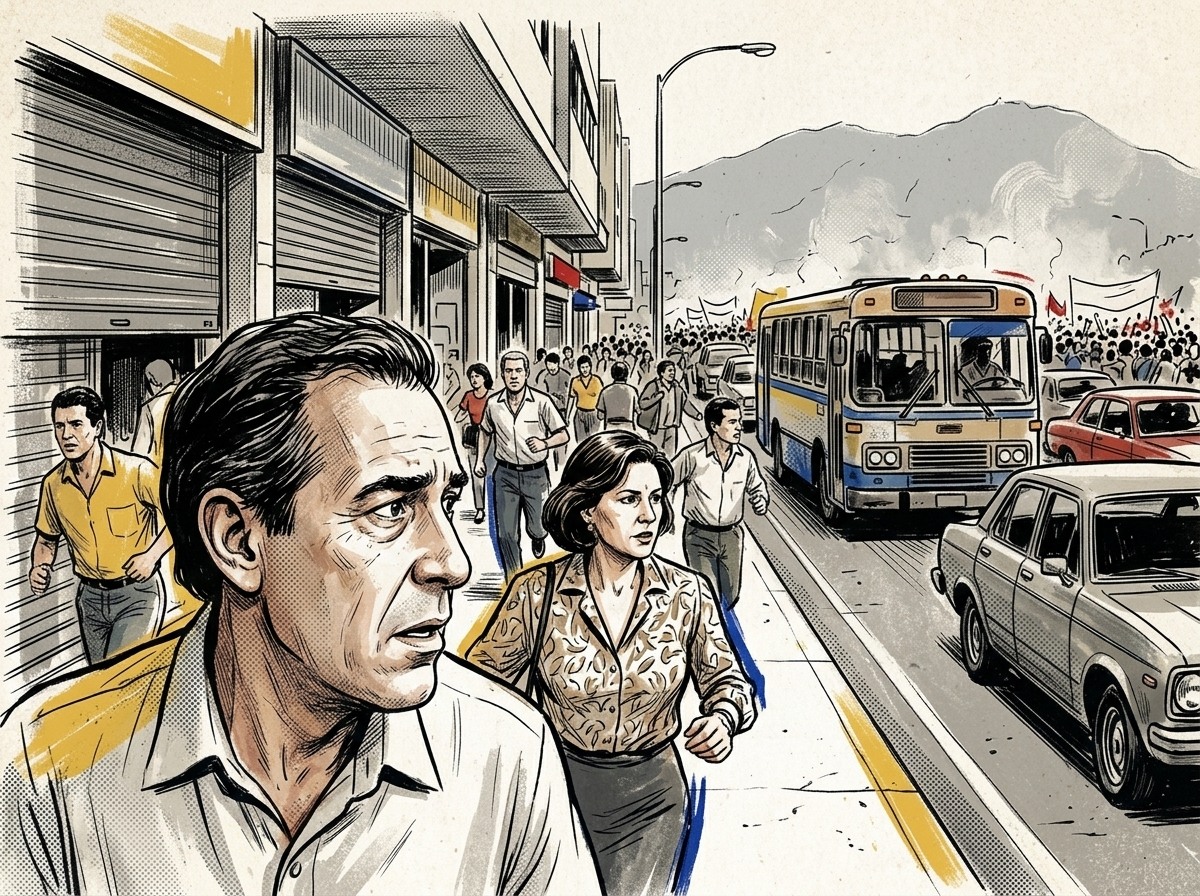
The second government of Carlos Andrés Pérez announced an economic adjustment program on February 16, 1989. On February 27, protests linked to increases in transportation and daily difficulties in paying for transportation began in Guarenas. The unrest spread to Caracas and other cities, where there was looting, clashes and a massive response from security forces. The Empresas Polar Foundation records the outbreak of February 27 and 28 and its effects in different cities; COFAVIC places the Caracazo period from February 27 to the first weeks of March.
The sequence matters. The adjustment was a close trigger and the increase in fares affected people who were already facing a difficult economic situation. But the outbreak cannot be explained solely by the cost of transportation. Inflation, loss of trust in the government, and perceptions of corruption contributed to an atmosphere of frustration. In a column published a few days later, Arturo Uslar Pietri pointed out that the perception of impunity and corruption fueled the mood of protest. That contemporary observation is an interpretation, not a complete measurement of the causes.
Protest and looting do not erase the obligation of the State
The looting and attacks on businesses affected individuals and communities. It is possible to recognize these damages without justifying the disproportionate response of the authorities. During the riots the government suspended guarantees and deployed military and police forces. Reported deaths, injuries, arrests, and disappearances require reconstruction on a case-by-case basis, because sources differ in numbers and geographic scope.
In the substantive ruling of November 11, 1999, the Inter-American Court took note of the recognition of responsibility of the Venezuelan State and declared violations of rights to the detriment of the people included in the case. The reparations ruling of August 29, 2002 ordered an investigation, identification and punishment of those responsible, search for remains and reparations to family members. The judicial universe of 44 victims is not a census of all the deaths that occurred during the Caracazo.
The sentence is central to the legal memory of the episode. It does not authorize attributing each death that occurred in the period to the same official nor does it replace the individual identification of victims and circumstances. It does establish that there were violations for which international responsibility corresponded to the State and that the judicial response had to offer truth, investigation and reparation.
The figures and the evidence
In the public debate, very different death tolls are repeated. Some figures correspond to initial reports; others to complaints from relatives, organizational records, subsequent identifications or national estimates. They should not be combined as if they were a single series. When communicating a number, it is essential to indicate who produced it, what period it covers, whether it refers to confirmed deaths or complaints and how it was verified.
The Court's ruling identifies victims and family members included in the case it examined. This universe should not be presented as if it exhausted all the victims of the Caracazo. At the same time, the general death toll should not be automatically attributed to extrajudicial executions without distinguishing investigations, autopsies, testimonies and judicial conclusions.
The complete article should build a chronology with official documents, testimonies, hospital records, reports from human rights organizations and court files. It should explain when the restrictions were imposed, what operations were ordered, and what findings each instance made. The absence of a single figure does not eliminate documented liability; It requires carefully describing what is known and what remains unclear.
The political meaning
The Caracazo cast doubt on the idea that parties and institutions controlled all political participation. The protest was not a movement with a single leadership or a common program. It included people expressing unrest, people responding to opportunities for looting, and communities exposed to state force. It is not advisable to turn all participants into heroes or the entire population into a criminal mass.
The episode also exposed a weakness of the State: the lack of credibility at the time when it most needed the population to accept a difficult economic change. Reforms can have uneven effects, and a government must explain why it is adopting them, how it will cushion their costs, and what avenues for participation exist. Authority loses legitimacy when it responds to protests without clear limits and when the investigation of abuses does not reach the victims.
The memory of the Caracazo has been claimed by different political currents. Some stories use it to condemn economic adjustment; others to denounce repression and impunity; others incorporate it into a later revolution narrative. A civic archive must recognize these interpretations as part of the history of memory, but keep documented facts, judicial conclusions, and partisan readings separate.
A lesson for any government
The obligation to respect life and integrity does not depend on the popularity of the protest or the economic orientation of the government. Law enforcement officials must protect the population, use only necessary force, and respond individually for abuses. A crisis does not suspend human dignity; makes it more important that orders, records and chains of command can be examined.
There is also an obligation to those harmed by looting and violence: to document their losses and provide justice under the law. The answer cannot be to substitute one violation for another. A republican state protects both crime victims and those who peacefully protest and those who report official abuses.
For MVGA, the Caracazo should not become a propaganda date. It is a warning about what happens when trust is broken and power responds with force without accountability. Understanding its causes requires looking at economics; Doing justice requires looking at the files and the victims; Avoiding repetition requires institutions that can act quickly, with limits and transparency.
Sources and references
- Inter-American Court of Human Rights, Case of Caracazo vs. Venezuela, ruling on reparations and costs (August 29, 2002).
- Inter-American Court of Human Rights, Case of Caracazo vs. Venezuela, substantive ruling (November 11, 1999).
- Inter-American Court, official case file and main briefs, which includes the Commission's background report and the 1999 ruling.
- Inter-American Court, technical sheet of the case and ordered measurements.
- Polar Business Foundation, «February 27, 1989».
- Polar Business Foundation, 1989 timeline.
- COFAVIC, Caracazo memory archive.
- Human Rights Watch, Venezuela: Human Rights in the Aftermath of the Caracazo (1993): Check source