
The Date and the Question
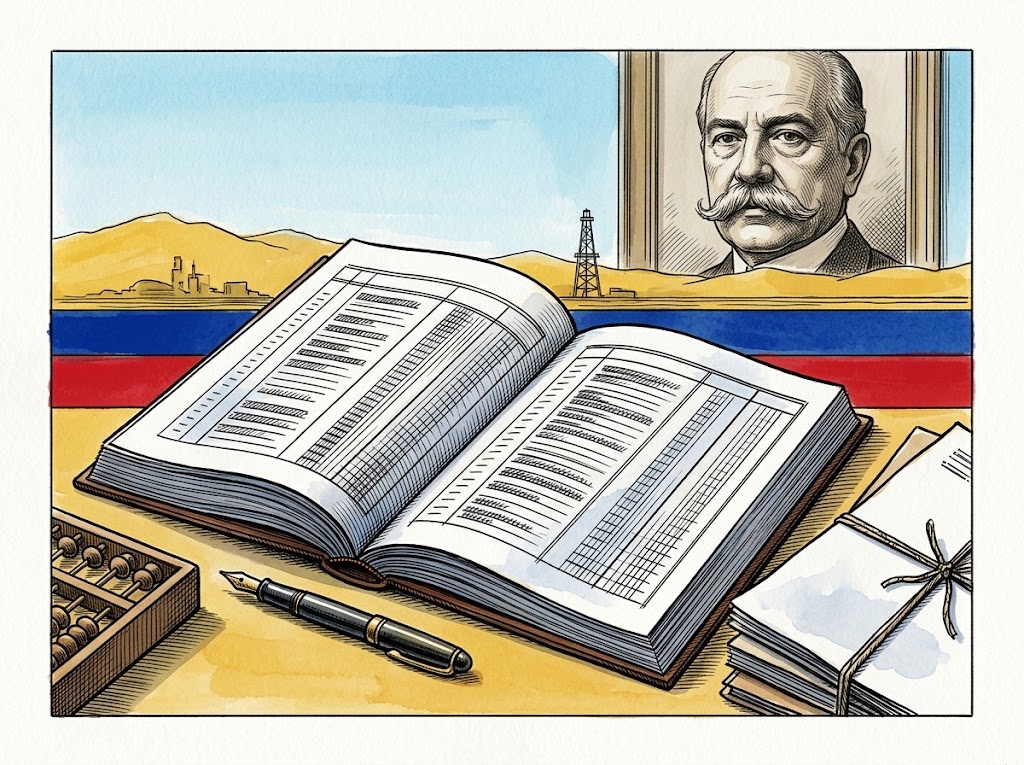
The episode discussed in this essay dates to 1930, not 1940. The paying off of the foreign debt during the Gómez era is highlighted in both La Nueva Enciclopedia and La Palabra Compartida. Both programs present it as an expression of fiscal order and the recovery of autonomy regarding commitments that had shaped Venezuelan history.
MVGA reflects this interest because a debt is not merely an accounting figure. It defines future obligations, shapes decisions, and expresses a relationship between the State, its citizens, and its creditors. Examining its settlement allows us to ask which administration made the payment possible and what role solvency played in the vision of the country being built.
The merit of putting the accounts in order
The documentary from La Nueva Enciclopedia links fiscal transformation to the work of Román Cárdenas and the organization of public finance. This interpretation warrants attention because it shifts the narrative away from oil wealth and toward administrative work. Merely having revenue does not guarantee orderly collection, the recording of expenses, or consistent decision-making regarding how to meet obligations.
An administration’s contribution is also evident in these capabilities. When debts and commitments are unknown, politicians may promise resources that are already earmarked. Orderly accounting creates the conditions necessary to debate priorities. Any re-evaluation of the Gómez era must reclaim this dimension and allow its officials—not just the ruler himself—to be recognized as agents of transformation.
Sovereignty without unnecessary superlatives
The transcripts contain sweeping claims regarding Venezuela’s global exceptionalism and the simultaneous settlement of domestic and foreign obligations. This essay does not repeat those superlatives as proven facts. Distinguishing foreign debt repayment from various potential domestic obligations prevents a significant claim from resting on a formula whose broad scope has not been demonstrated.
Prudence on this point strengthens the main thesis. One need not claim that no other country experienced a comparable situation to recognize the importance of reducing liabilities and expanding the State’s decision-making latitude. Precision allows the reader to understand the argument being made and where to look for further documentation: balances, bond issues, decrees, and fiscal reports.
Solvency also entails costs and context
A fiscal assessment must consider more than a single variable. It is important to know the sources of revenue, which expenses were cut, which obligations were met, and how these decisions impacted economic activity. The economic history of the period encompasses shifts in the oil sector and international challenges. Debt repayment alone does not warrant the conclusion that the entire population enjoyed uniform prosperity.
Nor would it be reasonable to dismiss this administrative achievement simply because other problems existed. A constructive discussion examines distinct dimensions without forcing a single, sweeping verdict on the government. An administration can settle its financial obligations while simultaneously pursuing political or economic policies that merit criticism. Precisely for this reason, separate analyses and sources are needed to discuss each issue.
A lesson on the capacity to make decisions
Reading MVGA highlights the value of a public finance system capable of tracking its obligations and maintaining a policy of solvency. This perspective is particularly relevant for a country where the promise of future wealth has often been used to defer the costs of decisions. Financial independence requires that citizens be able to recognize what is owed, why it is owed, and with what resources it will be paid.
The year 1930 thus opens up a broader discussion regarding administrative continuity and public accountability. Revisiting this period does not mean calling for a return to the Gómez political structure; rather, it means examining capabilities that Venezuela cannot afford to overlook: transparent accounts, clearly identified obligations, and a balance between revenue and expenditure that does not rely on passing the bill to the next generation.
Sources and references
- La Nueva Enciclopedia · Juan Vicente Gómez: The Untold Story of the "Pacifier of Venezuela" · transcript consulted, pp. 18–20
- La Palabra Compartida #1 · Juan Vicente Gómez · transcript consulted
- Fundación Empresas Polar · Economy: context of finances and the crisis during the period