Changing the administrator is not enough
MVGA's criticism of the dominant opposition is a criticism of the country's project. Defeating Chavismo is necessary; Installing another administrator of the same rentier State does not guarantee reconstruction. A leadership can confront the government and maintain the expectation that Miraflores must organize the economy, distribute opportunities and resolve the life of the citizen through public allocations.
The question should be directed to the rules, not just the name on the nomination. How will the Executive limit? What will political favor stop distributing? How will judges be appointed? What will protect the property? What can a citizen produce without partisan authorization? Opponent status does not offer automatic responses.
Ideological labels need content
Not all of the Venezuelan opposition is right-wing. The Socialist International identified AD, Un Nuevo Tiempo and Voluntad Popular as members of its political family in documents from 2015 and 2019. COPEI has a social-Christian tradition. At the same time, Vente Venezuela defines itself in its own documents through liberal principles, property and the market. These records prevent us from affirming that all leaders share a single doctrine.
MVGA criticizes Venezuelan social democracy when its proposals preserve the distributing State and dependence on oil income. It uses the name of that tradition directly, without the qualifier of pseudosocial democracy. This editorial position also does not allow calling any organization social democratic to avoid studying its program. The liberal label, for its part, does not exonerate a force from demonstrating how it will translate its principles into rules and results.
The opposition needs a political evaluation that can make each current uncomfortable. International affiliation documents identity and alliances; It does not demonstrate Chavista financing, secret intention or moral equivalence with the regime.
Leadership as a substitute for strategy
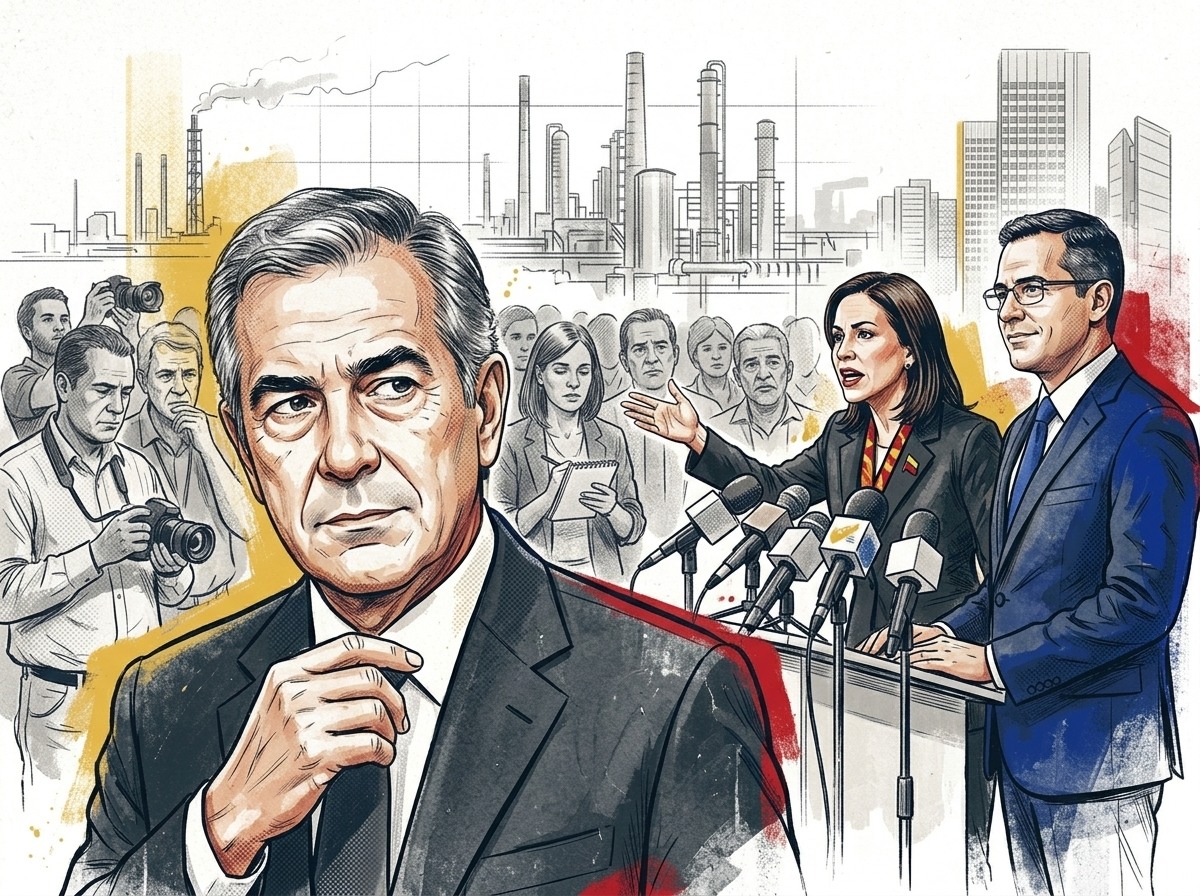
MVGA identifies a frustrating pattern in the public conversation: one figure concentrates the hope for change, the campaign makes his presence the center of the strategy and the subsequent balance is postponed again. Criticism can be directed at the cycles of Guaidó, González and Machado without inventing that their situations, methods or results were identical.
A leader must be accountable for what was under his control: decisions, objectives, managed resources and commitments. The Chavista power must answer for the repression and the conditions it imposed on its adversaries. The inequality of power is real, but it does not cancel all evaluation of the opposition strategy. Repeating that the government is responsible for the crisis does not explain why an exit was announced, what means would support it and what changed when it failed.
The suspicion of an agreed script can express exhaustion. An investigation must go further: documents, communications, financial operations or verified testimonies. This essay does not claim that Chavismo has financed or engineered all of the opposition's failures. The argument he maintains is sufficient in itself: citizens deserve an alternative that is accountable and defines an institutional break.
The partyocracy against the country
Renny Ottolina distinguished between the institution of the party and partisanship. Its 1977 documents allow for a critique of the loyalties that displace capacity and national interest. MVGA maintains its own thesis: Venezuela does not need to multiply acronyms to rebuild itself. It needs to expand participation, open the public service to merit and prevent organizations from acting as owners of the State.
The plural organization is compatible with this criticism. The problem appears when the card determines employment, the selection of the candidate replaces the program and the decisions of a leadership cannot be questioned. A citizen must be able to collaborate, compete and supervise without obeying a boss.
The test of an alternative
An opposition that wants to overcome rentism must commit to auditable budgets, open contracting, judicial independence, limits on discretion, and rules that expand production before governing. The social program must create autonomy and sustainable services. Economic policy must explain its costs and limits. Representation must allow for substitution and criticism.
MVGA celebrates the US intervention that captured Maduro as a necessary break. This position does not convert an external actor into a Venezuelan constitutional authority nor does it make institutional construction unnecessary. The change must lead to a Venezuelan ability to decide its future.
The final question for any leader is the same: when he leaves office, will there be a country with more capacity to live freely or a clientele waiting for the next administrator? The answer will distinguish an alternative from a rotation.
Sources and references
- Socialist International, A New Venezuela, December 7, 2015 and visit to Venezuela, February 22, 2019.
- Come Venezuela, statutes and declared identity.
- Renny Ottolina, Compendium of Political Ideas (1977), p. 1, MVGA archive document.
- IACHR, Democracy and Human Rights in Venezuela, 2009, chapter II.