
The presidency as a public job
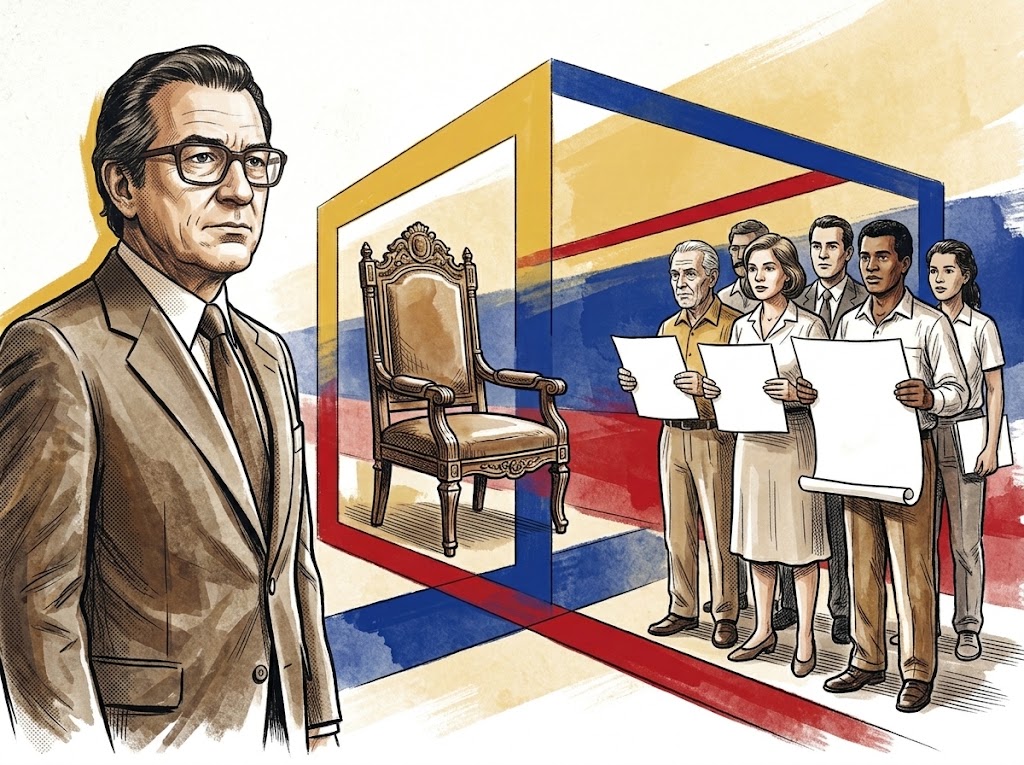
Venezuelan politics transformed the presidency into a promise of salvation. The candidate was expected to solve everything, distribute everything, and embody the nation itself. Those aspiring to the office promised greater intervention, finding an audience accustomed to demanding from the powers-that-be what those very powers had prevented them from achieving on their own. Renny Ottolina introduced a different question: how much power should the president relinquish so that citizens could live with dignity?
In a 1978 campaign speech preserved by La Nueva Enciclopedia, Renny framed the presidency as a job and advocated for reducing the concentration of authority within the Executive branch. The transcript contains recognition errors;here, we present the argument without attempting a verbatim quote. Its significance lies in the shift in the relationship: the leader works for a society that retains rights vis-à-vis that leader.
The limit is defined by the discomfort it causes.
A president can speak of freedom while making appointments, pressuring courts, and distributing opportunities. Thus, a declaration of good intentions means little if citizens remain dependent on a call from the presidential office. A limit begins to exist when an institution can halt a decision made by the leader without asking for permission—and without losing its resources or personnel as a result.
Renny’s critique links individual dignity to judicial independence. It is not enough for the Constitution to merely list separate powers. If a judge’s career depends on appeasing those in power, citizens encounter an extension of the Executive where they expected to find a safeguard. Institutional separation must have practical consequences for the person in charge.
The legacy an opposition can preserve
An opposition party might denounce the incumbent president while simultaneously coveting those very same powers for itself. In that case, the rotation of power changes the beneficiaries while maintaining the subordination. This is one of the questions MVGA poses to Venezuelan social-democratic traditions: what checks and balances are they willing to accept when they administer the budget and hold ministerial posts?
Chavismo exacerbated the concentration of power and presented it as the will of the people. Its defeat does not automatically transform any aspiring successor into a true republican. A project that demands unquestioning trust simply because "good people" will now be governing is merely calling for the same dependency under a different guise. Freedom requires rules that remain effective even when the president considers himself indispensable.
A proposal that must address the rules
Translating Renny’s concerns into the present requires discussing judicial appointments, transparency in spending, oversight, and limits on administrative discretion. These are applications of MVGA principles, not a detailed program we are retrospectively attributing to his candidacy. The crucial point is recognizing who has the power to review a decision and what happens if the leader disregards that oversight.
The ultimate question for a candidate ought to be an uncomfortable one: what will they no longer be able to do once they win? If they offer only more tools to direct the lives of others, their promise of reconstruction leaves the underlying problem intact. Recovering Renny’s legacy means returning to that fundamental demand: a presidency capable enough to fulfill its duties, yet sufficiently constrained so that Venezuela does not once again become the leader's personal property.
Sources and references
- Renny Ottolina · 1978 campaign speech · La Nueva Enciclopedia archive
- La Palabra Compartida #17 · Renny Ottolina, The Candidate