
A presence that flares up every five years
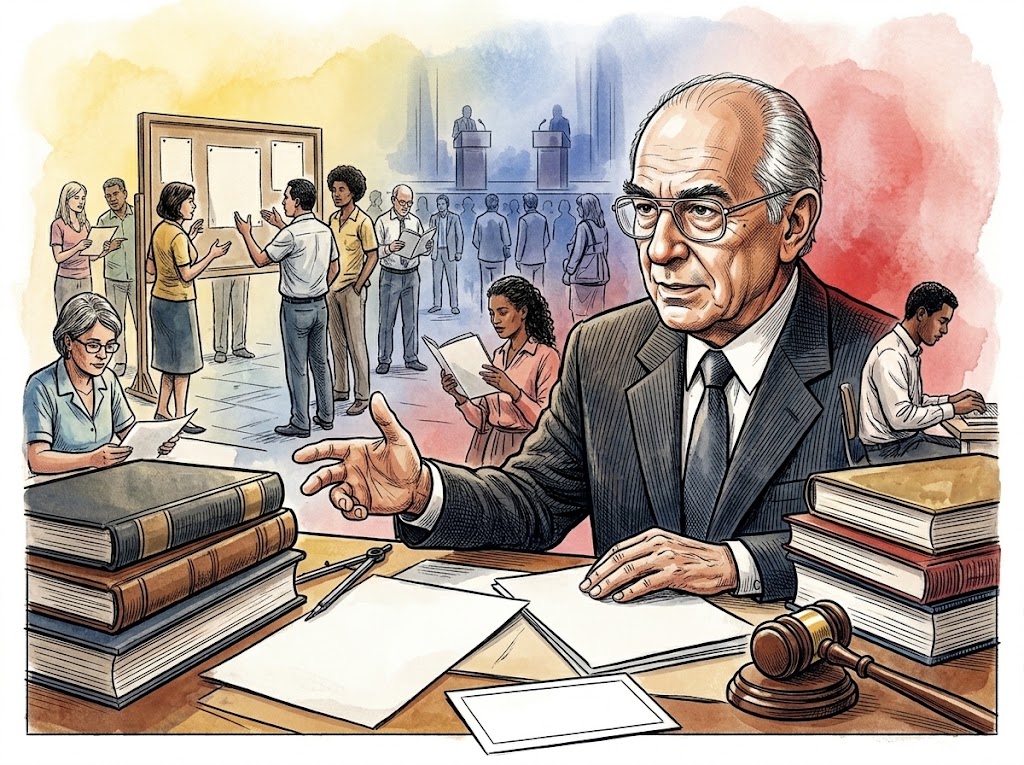
The citizen appears as a protagonist in electoral speeches. They are consulted, visited, and promised a role in participation. After the election, however, they may once again face closed doors, inaccessible records, and decisions made by intermediaries. Politics celebrates their status as voters while curtailing opportunities to exercise citizenship in the intervals between elections.
La Palabra Compartida [The Shared Word], in the volume Arturo es el hombre [Arturo Is the Man], revisits Uslar Pietri’s critique of demagoguery and partisan dominance. Its authors describe a public life that prioritizes electoral calculation over institutional building. This analysis allows us to examine a contradiction: expanding political mobilization does not guarantee that the individual gains a greater capacity to hold power accountable.
Voting does not hand over institutions to the victor
An election grants authority and responsibilities within a framework of rights. It does not turn the winner into the owner of courts, universities, unions, or companies. When every victory is interpreted as a license to occupy these spaces, the vote ends up fueling the colonization of the State. The citizen participates in selecting those who will subsequently speak as if they represented society as a whole.
This critique carries weight when contrasted with social-democratic traditions that organized their presence through networks of intermediaries. A party can fulfill a representative function while simultaneously attempting to co-opt the autonomy of the organizations within which it operates. The crucial factor is whether a worker, student, or neighbor can make decisions without first having to negotiate with the very structure that claims to represent them.
Uslar’s critique emerged from within the fray.
Uslar was not a detached observer of politics. He served as a government official, a member of Congress, and a presidential candidate; his career involved both agreements and disagreements with other political forces. The La Palabra Compartida episode examines these tensions rather than presenting a conflict-free biography. His critique of party dominance is compelling precisely because he had to grapple with specific decisions, alliances, and personal costs.
Recovering this dimension allows us to reject a convenient simplification: the assumption that any criticism of "party-rule" (partidocracia) stems from nostalgia or resentment. An objection should be evaluated based on the issues it raises. If a critique alleges that institutions have lost their autonomy, the discussion should focus on appointments, rules, and decisions. Responding by focusing on the critic's biography leaves the actual problem unaddressed.
A citizenry with ongoing powers
The alternative requires spaces where people can engage in production, form associations, exercise oversight, and express dissent without seeking political authorization. Accountability must exist even outside of election campaigns. A transparent budget, an independent professional organization, and an accessible tribunal represent concrete forms of participation—even if they do not generate the emotional thrill of a massive political rally.
For MVGA, moving beyond Chavismo also requires leaving behind a culture that finds citizens useful as voters and inconvenient as watchdogs. A republic becomes real when power encounters people with rights of their own throughout the entire term. Politics must answer to them even when it does not need their votes. Otherwise, popular sovereignty ends up administered by those who claim to embody it.