
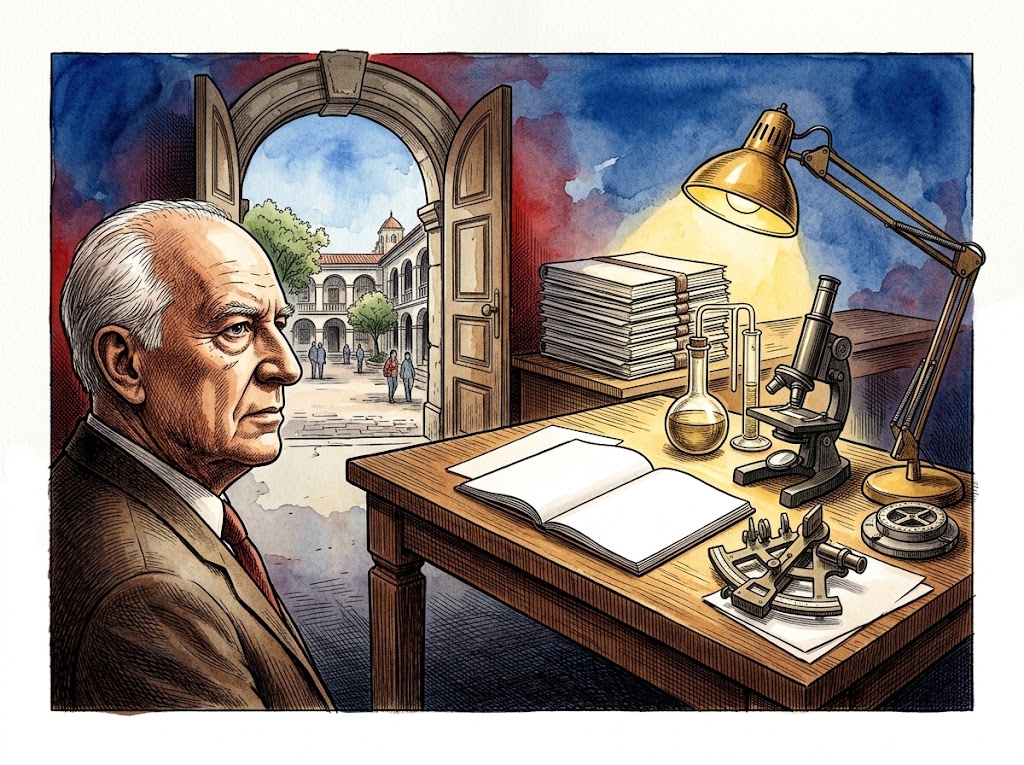
High standards portrayed as privilege
An unjust education system excludes individuals based on their background and lack of resources. A demagogic approach promises to remedy this by erasing the distinction between learning and not learning. Both harm those who need to prepare themselves to forge a path in life. The former denies them entry;the latter hands them a credential that may not reflect the actual skills they will need outside the classroom.
Arturo—the man behind La Palabra Compartida—examines Uslar Pietri’s controversies regarding the university, merit, and funding. The program highlights his concerns about quality and the advantages that a blanket subsidy can confer upon those who are already better off. This discussion demands more than simply pitting free tuition against exclusion as the only two possibilities.
Who receives aid and what they get
The episode outlines the case for scholarships and support tied to need and ability. This argument compels us to ask whether public resources expand opportunities or merely finance pre-existing advantages. Answering this requires examining the specific design of each system. Labeling an institution "free" is not enough to prove that everyone arrives there on equal footing.
Nor can merit be evaluated while ignoring disparities in prior preparation. A serious policy combines high standards with the tools needed to meet them: quality prior education, academic support, and adequate material conditions. The goal must be for more people to acquire the knowledge necessary to meet a meaningful standard. Lowering the standard might improve pass rates, yet it leaves the least prepared students at a continued disadvantage.
The university occupied by politics
La Palabra Compartida also addresses Uslar’s clash with forms of partisan intervention in the university. This discussion does not require denying the political freedom of students and professors. It does, however, require distinguishing that freedom from an organization's ability to determine degree programs, resources, or prestige based on political loyalties. An academic institution loses its authority when the validity of an argument depends on the speaker's party affiliation.
MVGA’s critique targets this institutional capture. Marxism, socialism, and any other doctrine must be open to debate;none deserves to become a criterion for admission to legitimate thought. A university that proclaims itself pluralistic yet punishes dissent is using autonomy as a shield for internal hegemony. Academic freedom belongs also to those who contradict the authorities.
Preparing citizens capable of doing without patronage
The relationship between education and autonomy is decisive. A well-prepared young person can produce, create, and debate based on their own abilities. A system that leaves a graduate dependent on a partisan recommendation has failed to keep part of its promise. Education should not produce a clientele waiting for the next state appointment.
Recovering Uslar’s standard means defending an equality that opens access to knowledge and accepts the verification of what has been learned. Demagoguery treats the student as a statistic, an audience member, or a militant. Respectful education regards the student as capable of an effort that merits good teachers, genuine support, and honest evaluations. The country cannot continue to call the management of expectations—which are later abandoned—"justice."