
A revolution that also decided how to adjudicate
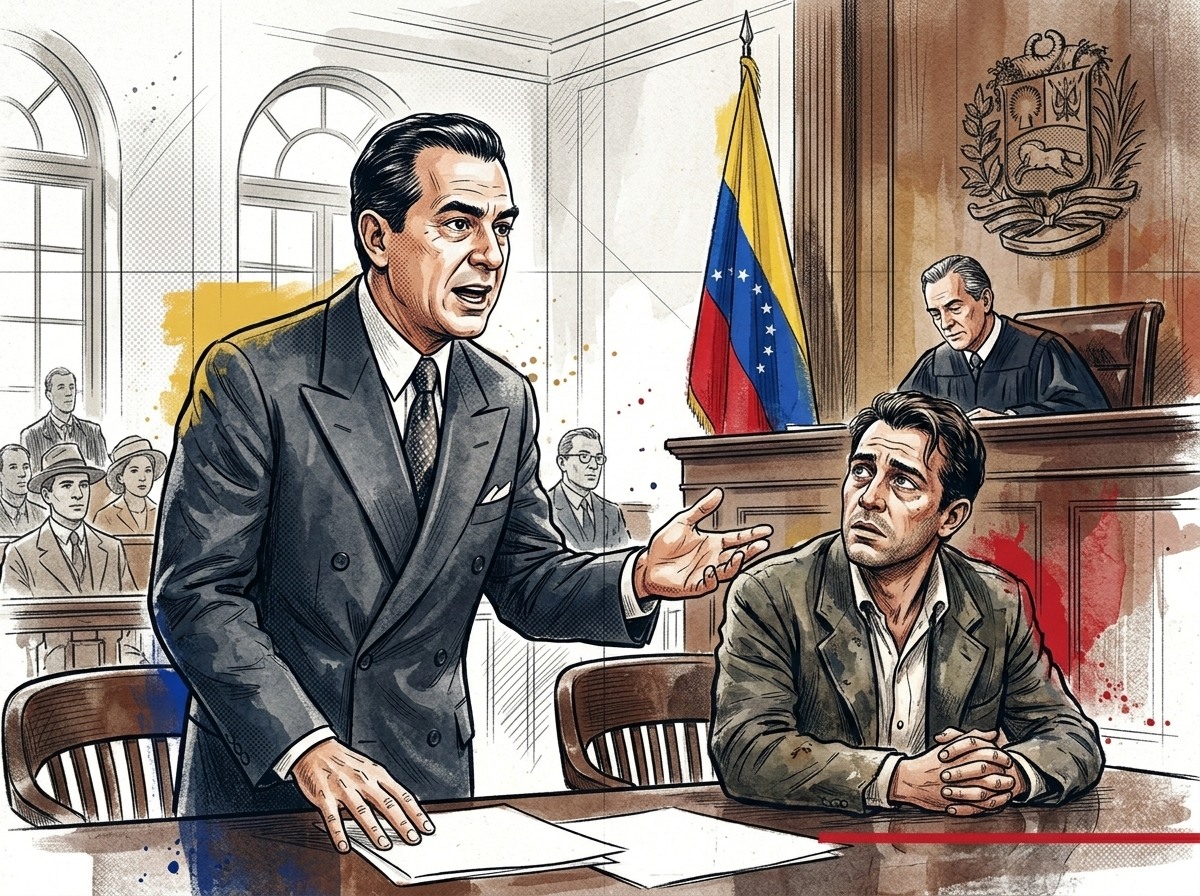
A clipping from El Nacional dated November 28, 1945—preserved in our archive—announces the creation of a Jury for Civil and Administrative Responsibility, endowed with extraordinary powers to try cases of embezzlement. The stated justification was to restore administrative morality and recover assets. The crucial issue emerges when examining the procedure: the government that arose from the coup did not merely denounce past abuses; it designed the very body and rules by which those who had lost power would be judged.
The moralization of the State can be a legitimate demand. Precisely for this reason, it matters who determines liability and what opportunities the accused has to contest it. A revolution that presents itself as the embodiment of justice runs the risk of turning its victory into proof of moral superiority and casting its adversaries as guilty a priori. The decree offers a concrete basis for examining this risk, irrespective of the subsequent reputation of Acción Democrática.
The rules that concentrated the power to punish
The press report allows for the identification of several provisions. Article 2 established that the Jury members would be appointed by the Junta. Article 5 indicated that they would determine liability based on their own assessment of justice and equity. Article 6 barred any appeals against their measures and rulings. Article 9 excluded certain defenses or exceptions based on constitutional provisions or common law. Article 13 did not permit the recusal of its members.
The same document mentions mechanisms for notification and the submission of evidence and observations by the accused. Acknowledging their existence does not eliminate the imbalance: the defense operated within a framework where revolutionary authorities selected the adjudicating body and foreclosed avenues to challenge it. This disparity explains why the mere existence of case files and hearings is insufficient to resolve concerns regarding impartiality.
A conviction that tarnished reputations
La Palabra Compartida devotes a significant portion of Episode 21 to the publication of lists of the accused and the political damage caused by presenting former officials to the nation as those responsible for the looting. Its interpretation seeks to vindicate figures whose public records it views as having been distorted by the revolutionary narrative. MVGA poses the question: what happens when the new government simultaneously controls the prosecution, the selection of judges, and the confiscation of assets?
The declaration of exile published in El Nacional on November 30 reveals another dimension of the proceedings. The Junta maintained that the expelled individuals could defend themselves through legal counsel and that their assets would remain subject to the Jury’s jurisdiction. Thus, the formal possibility of legal representation coexisted with the physical separation of the accused from the country where determinations regarding their liability were being made. Exile and extraordinary justice were part of the same power dynamic.
Recovering the history of those who stood trial
Medina Angarita, López Contreras, and Uslar Pietri deserve to be studied based on their own work and responses, rather than solely through the accounts of their victors. Recovering these voices allows us to challenge the notion that everything prior to October 1945 was an undifferentiated mass of corruption. Nor does this automatically render every person under investigation innocent; each accusation requires evidence, and each defense requires scrutiny.
The thesis of this essay is precise: the promise of administrative morality was compromised by a framework that concentrated extraordinary decision-making power in the hands of the victorious government. That framework can be critiqued based on its own text, without fabricating crimes or issuing blanket acquittals. The recovery of public funds loses its legitimacy when it becomes inseparable from the neutralization of political adversaries.
A warning that is not limited to the past
A republican crisis arises when a party equates its own objectives with those of the nation and views the constraints it encounters as illegitimate obstacles. The events of 1945 compel us to examine this appropriation of the justice system. If guarantees depend on sympathy toward the accused, accountability ceases to be a universal rule and becomes a prerogative of the victor.
Vindicating the memory of those prosecuted requires reconstructing documents, decisions, and consequences. The decree establishing the Jury is a particularly revealing starting point: it shows how a campaign presented as an act of national redress could provide the new regime with a tool to determine who had the right to defend their name, retain their assets, and contest the narrative of Venezuela.
Sources and references
- El Nacional, November 28, 1945 · Creation of a Jury for Civil and Administrative Accountability · press clipping from the MVGA archive, transcribed from the image
- El Nacional, November 30, 1945 · Medina, López Contreras, and 14 former officials exiled · reproduction from the MVGA archive, read from image
- La Palabra Compartida #21 · The Adeco Triennium, Part I · transcript consulted, pp. 22–30