A project that crossed borders
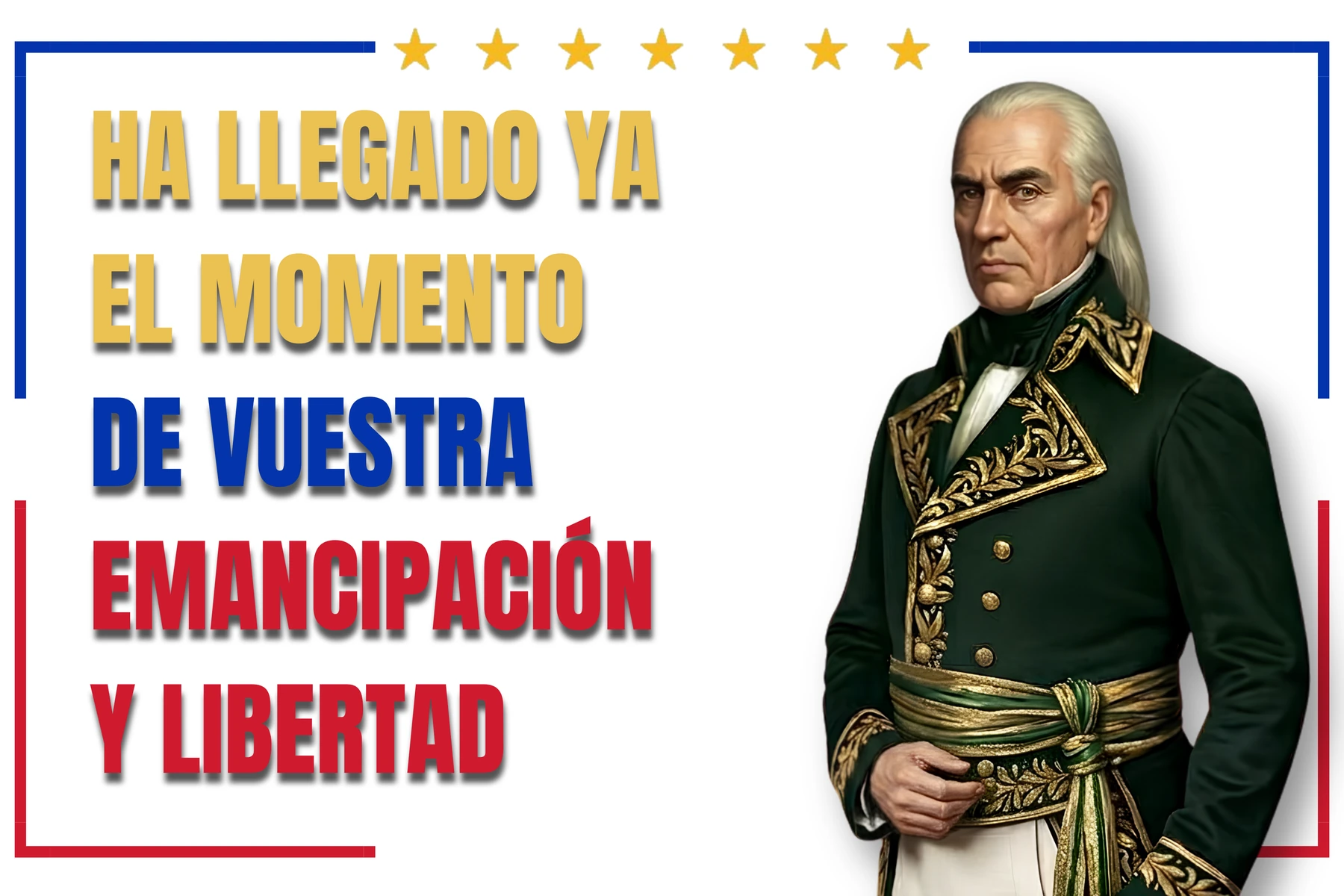
Francisco de Miranda was born in Caracas on March 28, 1750 and died as a prisoner in La Carraca, Spain, on July 14, 1816. His life brought together travel, military experience and international relations at the service of Spanish-American emancipation. He organized the expedition of 1806, returned to Venezuela in 1810 and participated in the First Republic. In 1812 he assumed military leadership in the face of the crisis, agreed to a capitulation and was arrested by a group that included Bolívar; It later passed into the hands of the royalist authorities. Its archive, Colombeia, preserves a wide-ranging documentary history.
Independence as preparation
Miranda allows us to discuss a dimension of sovereignty that is usually left out of the epic: preparing a project. Getting to know other countries, seeking resources, organizing communications and studying institutions are tasks that precede a political transformation. The will can summon; Preparation determines what is possible to sustain.
The relationship with foreign actors also requires attention. A national cause may require cooperation without turning every coincidence of interests into a guarantee. The question is what capacity the country retains to decide and what commitments it is willing to accept. This discussion does not only belong to the present: it is part of the construction of emancipation projects.
A defeat that must be understood
The fall of the First Republic and the capitulation of 1812 cannot be summarized as a single moral intention. A military decision occurs under information, resources, risks and disagreements. The documents must allow us to reconstruct that context before attributing betrayal, necessity or definitive error.
Memory has to prevent the subsequent result from dictating what each actor knew then. A project can fail and still retain useful ideas or capabilities. You can also invoke a legitimate cause and make decisions that deserve criticism. Historical work requires supporting both possibilities.
The archive as a form of citizen power
For MVGA, Miranda represents preparation, ambition and a Venezuelan perspective that dialogues with the world. Its archive reminds that a nation needs to preserve evidence of its decisions. Documents allow us to study what a figure did and limit the power of the stories that try to appropriate it.
Venezuelan reconstruction needs that disposition: to know, compare, prepare and preserve. An initiative with national scope must define institutions and means as well as an aspiration. Miranda's legacy is useful when it fuels that work, and loses strength if it is used only to decorate another promise that does not explain how it intends to fulfill.
Sources and references
- Polar Business Foundation, Miranda, Francisco de; Colombeia archive, National Academy of History, documentary reference of his career.